Finding pest activity inside living spaces creates immediate stress, but resolving an infestation requires deliberate biological methods rather than panic. A professional pest control service San Diego homeowners rely on identifies structural entry points, targets species-specific nesting behaviors, and establishes low-toxicity chemical barriers around residential perimeters.

Pest control service in San Diego is a specialized structural inspection, biological eradication, and perimeter exclusion practice that stops active insect and rodent infestations inside regional residential properties.
Every service reflects the same meticulous attention to detail, whether it's a single job or a larger pest control service project across San Diego.
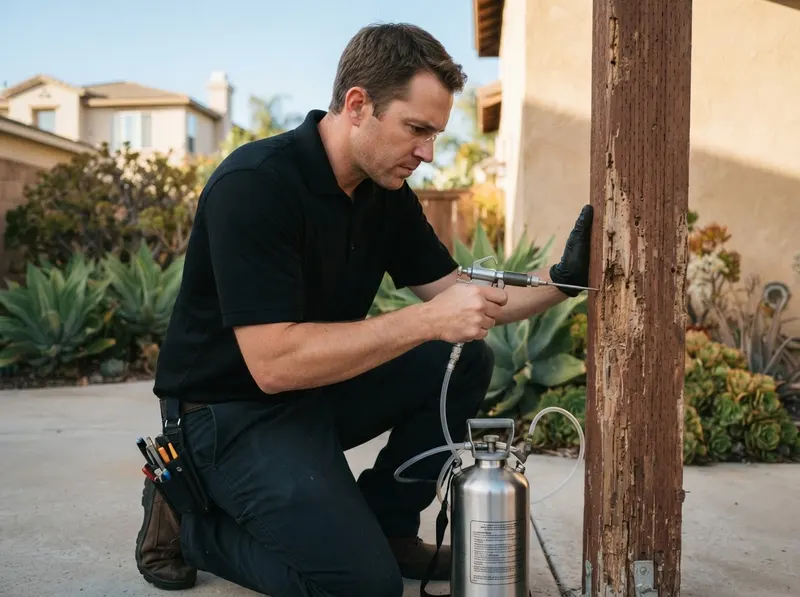
Precision drill-and-injection applications deliver non-repellent termiticides directly into subterranean and drywood termite galleries inside exposed framing, window sills, fascia boards, and attic rafters. Technicians identify active colonies by locating hexagonal fecal frass kickout piles, probe structural timbers using non-destructive acoustic sensors, and inject low-pressure expanding foam compounds containing imidacloprid or fipronil directly into internal wood voids. This targeted localized protocol eradicates resident alates, soldiers, and nymphs on contact while penetrating deeply into surrounding grain cells to prevent colony migration, all without displacing household members or requiring exterior nylon structural tenting.
Get a quote →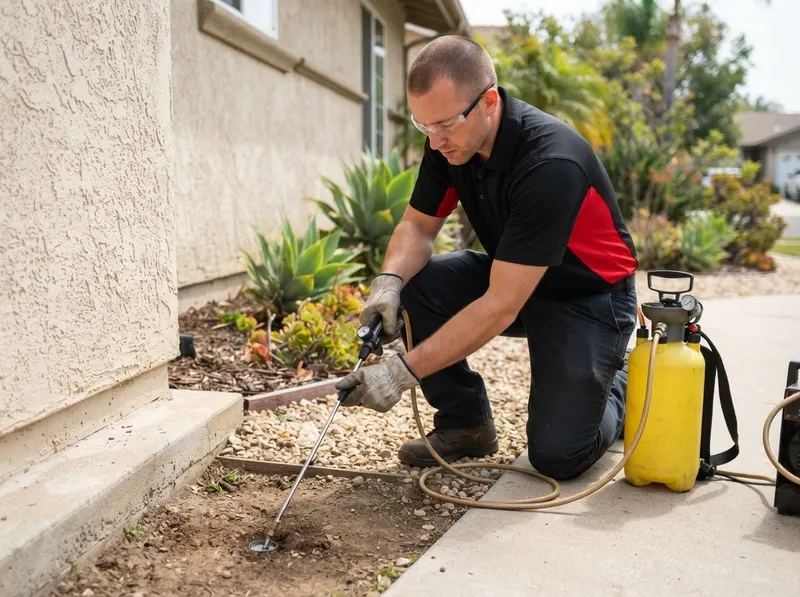
Continuous trench-and-rod liquid applications alongside exterior foundation stem walls intercept soil-dwelling subterranean termites before workers tunnel up through foundation expansion joints and structural subflooring. Technicians dig six-inch deep trenches along the exterior concrete foundation, apply non-repellent termiticide emulsions at four gallons per ten linear feet, and core-drill concrete patio slabs where exterior footings meet structural framing. Termites unwittingly pass through the undetectable non-repellent liquid barrier, binding active ingredients to their cuticles and transferring the biological disruptor throughout the central subterranean colony through mutual grooming and trophallaxis.
Get a quote →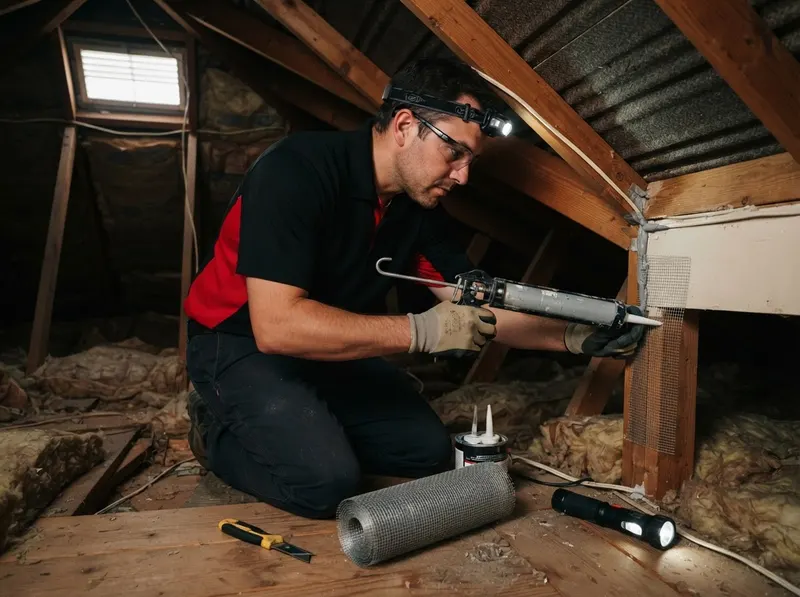
Full structural sealing using heavy-gauge quarter-inch hardware cloth, custom metal flashing, and copper wire mesh plugs roof gaps, crawl space foundation vents, and utility pipe penetrations to block roof rats and house mice. Service technicians conduct physical attic diagnostics to identify rub marks, urine tracking trails, and gnawed electrical insulation, install directional one-way exit cones that permit trapped rodents to escape without re-entering, and secure all sub-fascia corners. Interior snap-trap arrays placed within tamper-resistant station housings swiftly capture remaining animals without utilizing anticoagulant rodenticide baits that leave decaying carcasses trapped inside concealed drywall bays.
Get a quote →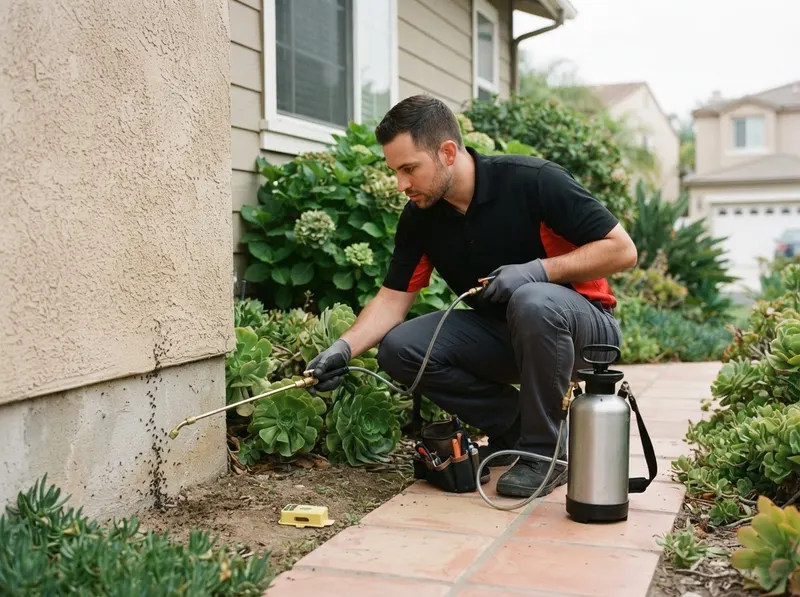
Application of micro-encapsulated baits and non-repellent perimeter sprays allows foraging worker ants to transfer low-toxicity active ingredients directly to satellite queens within nested colonies. Because coastal Argentine ants belong to an interconnected regional supercolony containing millions of queens, traditional pyrethroid sprays trigger defensive colony budding that splits a single trail into multiple domestic infestations. Technicians deploy targeted fipronil or dinotefuran liquids and thiamethoxam matrix gels along moisture trails, plumbing penetrations, and landscape expansion joints, ensuring the entire social hierarchy ingests the active chemistry over seventy-two hours for complete colony mortality.
Get a quote →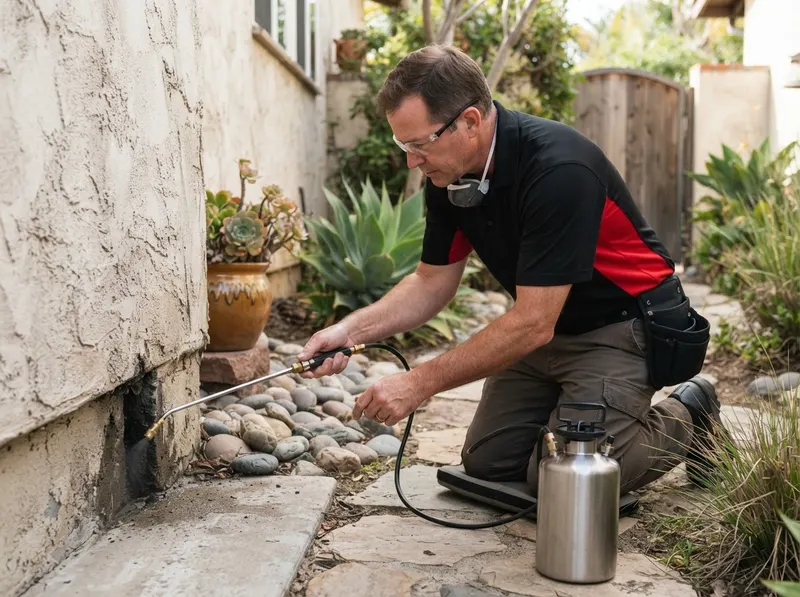
Manual web clearing, targeted crevice micro-dusting, and non-residual foundation barriers eliminate web-building arachnids around exterior stucco eaves, garages, weep screeds, and block-wall footings. High-reach mechanical brushing removes adult spiders, egg sacs, and clinging insect prey from architectural overhangs and window trim. Technicians subsequently deposit hydrophobic micro-dusting silicas into deep exterior mortar voids, irrigation utility boxes, and sub-slab cavities where female black widows construct chaotic cobwebs, halting ongoing arachnid populations while leaving no sticky surface residues on exterior stucco or patio surfaces.
Get a quote →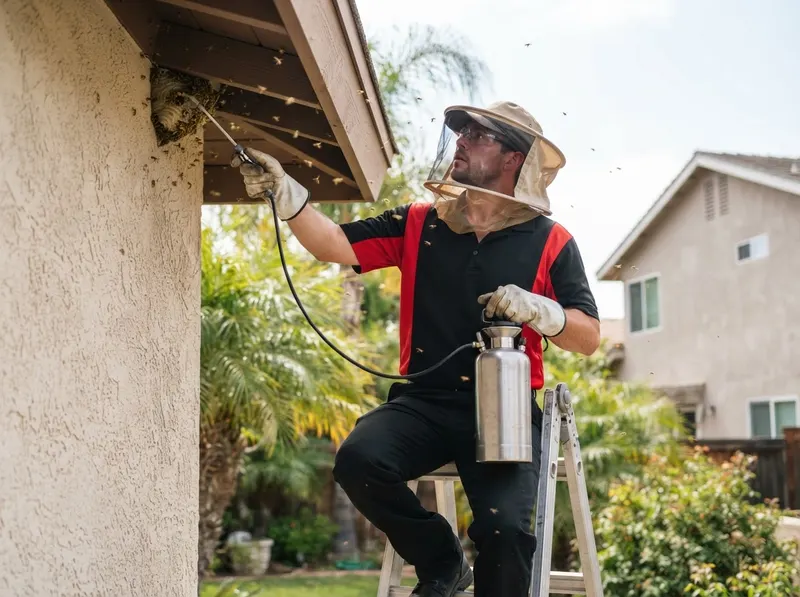
Direct mechanical removal and targeted nest neutralization eliminate paper wasp nests, aerial yellow jackets, and mud daubers beneath patio overhangs, pergola beams, structural eaves, and decorative roof ridges. Specialized technicians use pressurized pyrethrin aerosols delivered through extended telescoping rods to freeze flying stinging insects instantly on contact, preventing defensive swarming toward patio seating or entry walkways. After the colony is suppressed, technicians scrape away paper nests, treat attachment anchor points with long-lasting residual deterrents to prevent seasonal rebuilding, and clear all stinging insect debris from residential exterior zones.
Get a quote →
Insect growth regulators (IGRs) combined with targeted bait pastes neutralize German cockroaches in kitchen cabinetry and Oriental water bugs entering ground-level drainage pipes. German cockroach protocols focus on micro-dot paste baiting inside cabinet hinge pockets, behind refrigerator compressor coils, and within appliance voids where warm motors create high-humidity breeding pockets. For subterranean Oriental and American roaches ascending through plumbing traps and perimeter sewer connections, specialized enzymatic foam drains and biological residual perimeter coatings degrade grease layers, eliminate bacterial attractants, and eliminate nocturnal roaches emerging onto bathroom flooring.
Get a quote →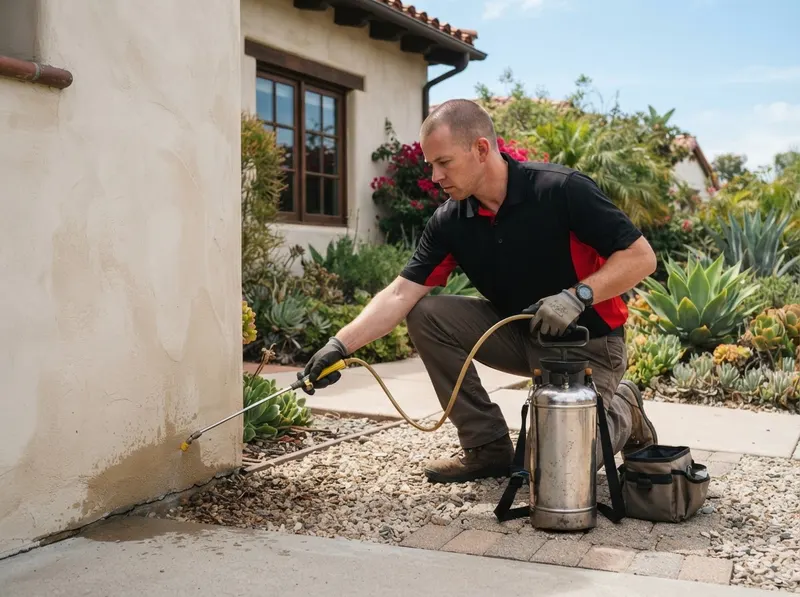
A quarterly exterior liquid defense band applied three feet up foundation walls and three feet out over soil surfaces repels perimeter invaders before interior penetration occurs. Using micro-encapsulated formulations designed to resist UV breakdown and irrigation wash-off, the protective exterior band creates a seamless boundary across stucco weep screeds, crawl space access hatches, patio thresholds, and perimeter gravel beds. This exterior barrier continuously repels pillbugs, earwigs, crickets, centipedes, and wandering perimeter ants, establishing steady seasonal control outside the house and eliminating the need for routine chemical sprays inside residential interior living quarters.
Get a quote →You get a firm, itemized quote for your pest control service before any work begins, no surprises, no pressure.
Careful prep, tidy work, and a full cleanup when we are done. We treat your home and belongings like our own.
The same trusted, background-checked team from the first call to the final check.
Selecting structural pest interventions depends entirely on pest biology, colonization depth, and home architecture. If a property experiences isolated insect trails along slab cracks or bathroom baseboards, targeted exterior barrier spraying and slow-acting gel baits provide rapid clearance without pesticide drift inside living rooms. If attic spaces or crawl spaces contain roof rat droppings or gnawed electrical wiring, mechanical exclusion sealing paired with tamper-resistant multi-catch trapping stations is necessary; chemical-only treatments fail because they leave ingress vectors open.
For localized drywood termite kickout pellets under window casings or exposed rafter tails, direct precision wood injection of imidacloprid eliminates colonies cleanly without forcing residents to vacate; conversely, when wood damage extends into structural wall framing across multi-story roof trusses, structural tent fumigation using sulfuryl fluoride becomes unavoidable despite the trade-off of a three-day property evacuation and food preparation requirements. Homeowners balancing immediate cost against long-term prevention should weigh isolated spot clearing against perimeter seasonal maintenance: single-incident applications eliminate the immediate generation but leave exposed subfloors vulnerable to re-invasion during seasonal temperature shifts, whereas recurring seasonal checkups replenish exterior bait stations and barrier bands around perimeter foundations to intercept foraging colonies before they reach interior drywall. When subterranean termites threaten ground-contact structural timber, property owners must choose between continuous exterior foundation trenching with non-repellent termiticides or in-ground cellular bait stations spaced every ten to twenty linear feet; trenching delivers immediate subterranean disruption along the foundation perimeter but requires digging into mature garden beds and patio slabs, whereas perimeter bait monitoring stations preserve landscape hardscaping but require three to six months of gradual colony ingestion to achieve queen mortality.
Similarly, when German cockroaches infest kitchen cabinetry and wall cavities, selecting precision insect growth regulator bait pastes eliminates reproductive life cycles without toxic indoor aerosol spraying, though complete colony collapse requires seven to fourteen days of gradual ingestion rather than an instantaneous topical knockdown. For canyon-adjacent single-family residences experiencing exterior black widow or brown spider colonization, quarterly foundation wash-backs combined with physical web sweep down disrupt outdoor breeding cycles while keeping synthetic pyrethroids outdoors away from domestic family living rooms.
Every project gets a firm, written price after a free on-site visit. Ranges below for orientation.
Tell us about your pest control service job and we'll send a clear, written quote, usually the same day. Or just call and talk to a real San Diego pro.
(858) 742-3452
San Diego County encompasses over 200 distinct microclimates, ranging from maritime fog layers along Pacific Beach and Ocean Beach to dry, thermal canyon corridors running through Tierrasanta and Clairemont Mesa. Properties flanking urban canyon reserves near Balboa Park, Torrey Pines State Natural Reserve, and Mission Bay Park face constant rodent migration pressure: native roof rats travel along utility lines, bougainvillea, and mature palm fronds to enter untreated attic eaves. Furthermore, the regional presence of the massive California Argentine ant supercolony means that standard supermarket insect sprays cause colony budding rather than eradication, making non-repellent biological baits mandatory for lasting control across local stucco and slab foundations. Coastal architecture throughout Point Loma and La Jolla frequently features exposed architectural post-and-beam construction, cedar shingles, and coastal rafter tails that drywood termites target during their late-summer reproductive swarms between August and October. Because subterranean termite colonies thrive in the moist coastal soil profiles near Mission Bay, homes built on concrete slabs with perimeter expansion joints require specialized non-repellent trenching barriers to intercept subterranean mud shelter tubes before foraging worker termites breach interior framing. In inland neighborhoods such as Scripps Ranch and Mira Mesa, wide diurnal temperature swings cause canyon-dwelling arachnids, including western black widows, to seek sheltered crevices along garage weep screeds, exterior stucco expansion joints, and backyard block perimeter walls. When winter rains soak coastal soils from December through March, ground-nesting Argentine ants and American water bugs migrate en masse up through plumbing penetrations and raised crawl spaces in vintage Craftsman homes throughout North Park and Hillcrest, demanding precise physical exclusion techniques combined with slow-acting botanical bait matrices tailored specifically to regional soil moisture profiles and structural conditions.
Free estimates for San Diego & the surrounding area.
 Pacific Cedar Pest Control