Bed bug heat and chemical remediation addresses active Cimex lectularius populations across residential properties, short-term rentals, and multi-unit complexes in San Diego. Thermal remediation utilizes industrial…
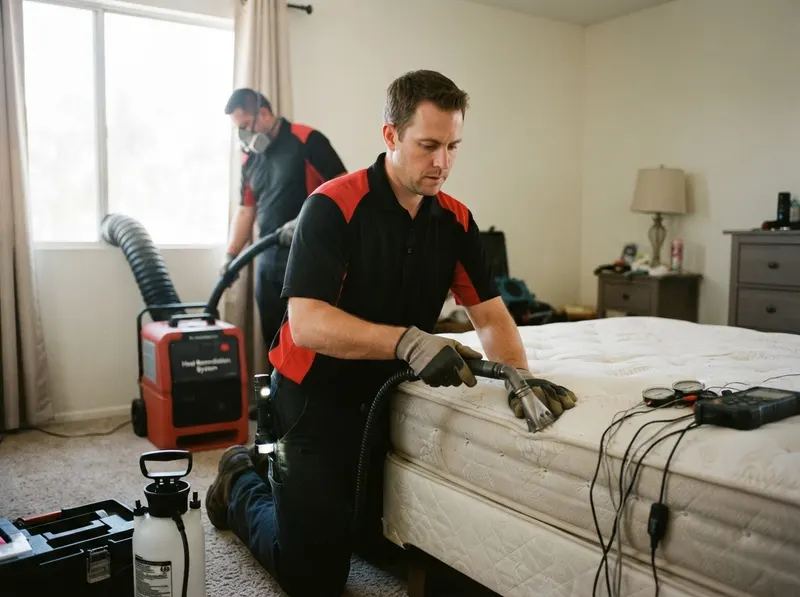
Bed bug heat and chemical remediation addresses active Cimex lectularius populations across residential properties, short-term rentals, and multi-unit complexes in San Diego. Thermal remediation utilizes industrial portable heating units that raise the ambient internal room temperature to a sustained 120°F to 135°F for at least 90 minutes. This threshold is scientifically lethal to bed bug adults, nymphs, and eggs by denaturing cellular proteins without requiring systemic structural pesticide saturation. For multi-unit structures or homes where complete structural heat is constrained by building layout, targeted chemical remediation applies non-repellent residual liquid insecticides and desiccant dusts, such as amorphous silica gel, into electrical faceplates, wall cavities, and box spring framework to intercept surviving harborages.
Selecting the appropriate treatment protocol depends on structural construction, clutter density, and infestation scope. Whole-structure thermal treatment fits single-family properties in Tierrasanta, Scripps Ranch, and Clairemont Mesa where complete room sealing holds heat uniformly across drywall and framing. The trade-off is higher initial equipment staging overhead and extensive room preparation. Conversely, targeted chemical barrier applications suit older multi-family apartment communities in North Park, Hillcrest, and Pacific Beach, where shared party walls allow thermal transfer into adjacent units. Chemical applications establish perimeter barriers that kill bugs over 10 to 21 days as eggs hatch, requiring lower initial preparation than whole-house baking but often demanding a mandatory day-14 follow-up inspection.
Coastal atmospheric conditions in San Diego County influence how treatments are managed. Higher relative coastal humidity in Ocean Beach, Point Loma, and La Jolla slows desiccant dust performance compared to inland valleys, requiring calibrated air-mover placement to circulate dry, heated air evenly into subflooring and behind baseboards. High-density residential pockets in Mira Mesa often experience localized bed bug transfer between adjoining townhome walls; applying localized perimeter dust barriers stops lateral migration before heat reaches maximum lethal levels. Remediation protocols do not require long-term recurring monthly service contracts, treating the infestation as an isolated biological event resolved through precise mechanical and chemical thresholds.
Every job gets a firm, written price after a free on-site visit.
Tell us about your bed bug heat and chemical remediation job in San Diego and we'll send a clear, written quote, usually the same day.
 Pacific Cedar Pest Control