Drywood termite localized treatment provides structural timber preservation when active colonies remain isolated to accessible sections of a building. In coastal and mesa neighborhoods like Pacific Beach, Ocean Beach,…
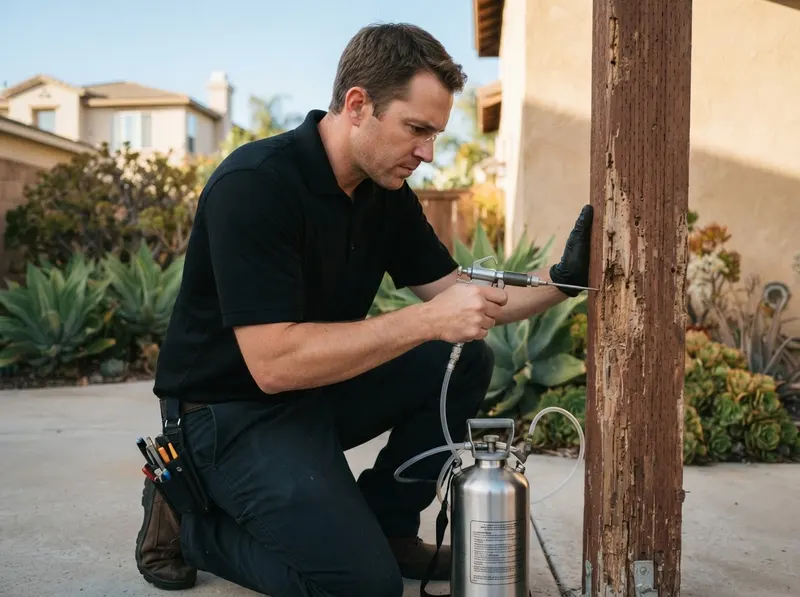
Drywood termite localized treatment provides structural timber preservation when active colonies remain isolated to accessible sections of a building. In coastal and mesa neighborhoods like Pacific Beach, Ocean Beach, Point Loma, and Clairemont Mesa, seasonal warmth and marine layer humidity drive Western drywood termites (Incisitermes minor) to swarm directly into fascia boards, rafter tails, and decorative exterior pergolas. Homeowners frequently discover hexagonal fecal pellets, known as frass, pushed through pinpoint exit holes onto patio concrete or interior carpet. A localized intervention isolates these distinct galleries rather than requiring a family to vacate for multiple days under vinyl fumigation tarps.
Technicians treat localized infestations using systematic precision boring into the active kick-out zones. Small entry ports measuring 1/8-inch in diameter are drilled directly into the chamber voids along the wood grain. Pressurized non-repellent liquid termiticides or expanding localized foams are injected through these ports, traveling throughout the gallery network where grooming behavior spreads the material across the colony. For unpainted interior framing found in attics throughout North Park, Hillcrest, and Tierrasanta, topical disodium octaborate tetrahydrate applications penetrate raw timber grain up to 2 inches, halting cellulose consumption and preventing future colonization.
Decision guidance depends strictly on gallery dispersion and timber access. Localized spot treatment fits situations where termite evidence is limited to three or fewer localized exterior wood members, attic framing sections, or interior door jambs. When inspections reveal inaccessible wall cavities, multiple interior rooms exhibiting subterranean frass drift, or multi-story timber penetration in older La Jolla, Scripps Ranch, or Mira Mesa properties, localized intervention yields diminishing returns and whole-structure fumigation becomes technically appropriate. The trade-off is focused property access and rapid re-entry versus whole-building coverage: localized treatment eliminates the need for hotel relocations, gas shut-offs, and food bagging, while requiring accurate visual identification of active timber zones.
Standard localized treatments carry a $250 minimum service charge covering initial gallery identification, specialized injection equipment calibration, and localized chemical application. Homeowners do not sign binding multi-year recurring service agreements. Applied compounds dry odorless inside closed wood cavities, keeping living quarters secure for families, dogs, and cats immediately following treatment completion.
Every job gets a firm, written price after a free on-site visit.
Tell us about your drywood termite localized treatment job in San Diego and we'll send a clear, written quote, usually the same day.
 Pacific Cedar Pest Control