An exterior perimeter maintenance barrier establishes a continuous band of protection around the exterior foundation wall and adjacent soil. In coastal San Diego neighborhoods such as Pacific Beach, Ocean Beach, and…
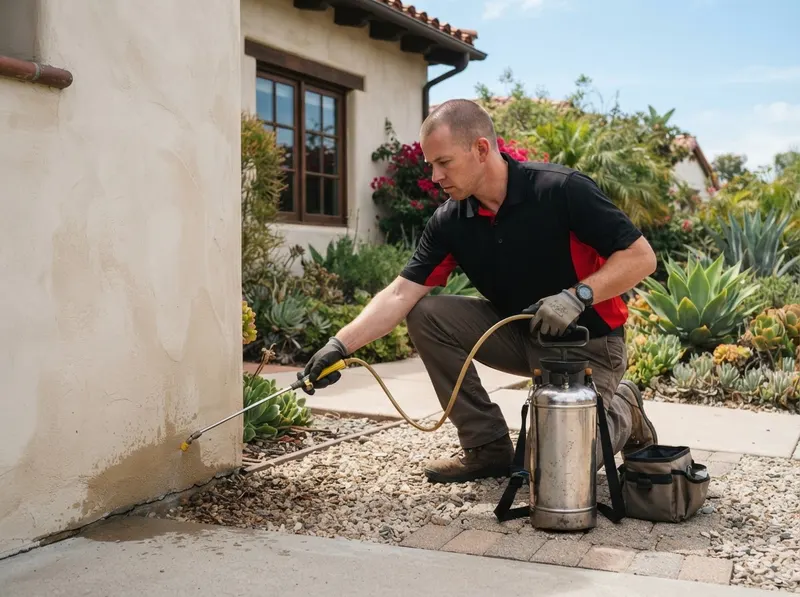
An exterior perimeter maintenance barrier establishes a continuous band of protection around the exterior foundation wall and adjacent soil. In coastal San Diego neighborhoods such as Pacific Beach, Ocean Beach, and Point Loma, persistent marine layers and cool evening temperatures drive ground-dwelling pests toward warm stucco walls. Treating 3 vertical feet up the exterior slab and 3 horizontal feet outward across soil or hardscape intercepts invasive Argentine ant mega-colonies before foraging trails discover cracks around door frames or sliding tracks. In inland microclimates like Tierrasanta, Scripps Ranch, and Mira Mesa, summer canyon heat causes subterranean pests to seek plumbing access points. Applying an insoluble, water-resistant barrier prevents pests from entering weep screeds without requiring chemical broadcast treatments inside active family living areas.
Selecting a standalone exterior maintenance barrier eliminates the trade-off of introducing chemical residues into interior living spaces. When indoor pest sightings involve structural drywood termites or heavy indoor rodent nesting, an exterior ground barrier alone will not resolve the internal colony. However, for recurring seasonal insect migrations, treating the outside structural envelope resolves the source without moving furniture or clearing kitchen cabinets. The physical barrier remains effective through routine irrigation schedules, with micro-encapsulated polymers bonding to concrete foundations, brick trim, and decorative gravel borders found in older North Park Craftsman homes and Clairemont Mesa ranches alike.
Application involves a systematic three-stage process. First, technicians inspect the structure's perimeter to locate high-moisture entry points, broken vent screens, and landscape bridging where tree limbs contact siding near Balboa Park and Mission Bay Park canyon edges. Second, technicians remove spider webbing and clearing loose organic mulch within 6 inches of the foundation. Third, technicians apply the EPA-registered perimeter formulation along foundation footings, crawlspace vents, window wells, and utility penetration points. Standard residential properties require reapplication every 60 to 90 days to maintain active residual levels against persistent sun exposure and irrigation wash-off.
Every job gets a firm, written price after a free on-site visit.
Tell us about your exterior perimeter maintenance barrier job in San Diego and we'll send a clear, written quote, usually the same day.
 Pacific Cedar Pest Control